HomeNewsSkills renewal vital to counter subsidence threat, Catalyst’s Paul Duddle tells conference
Skills renewal vital to counter subsidence threat, Catalyst’s Paul Duddle tells conference
With more subsidence data available than ever before, having the right expertise to use it is a big challenge, Catalyst’s Paul Duddle told delegates attending the I Love Claims Specialist Subsidence Conference.
The Operations Director at Catalyst Services UK, who was speaking in his role as Chairman of the Subsidence Forum, said skills development that embraces emerging technologies is also needed.
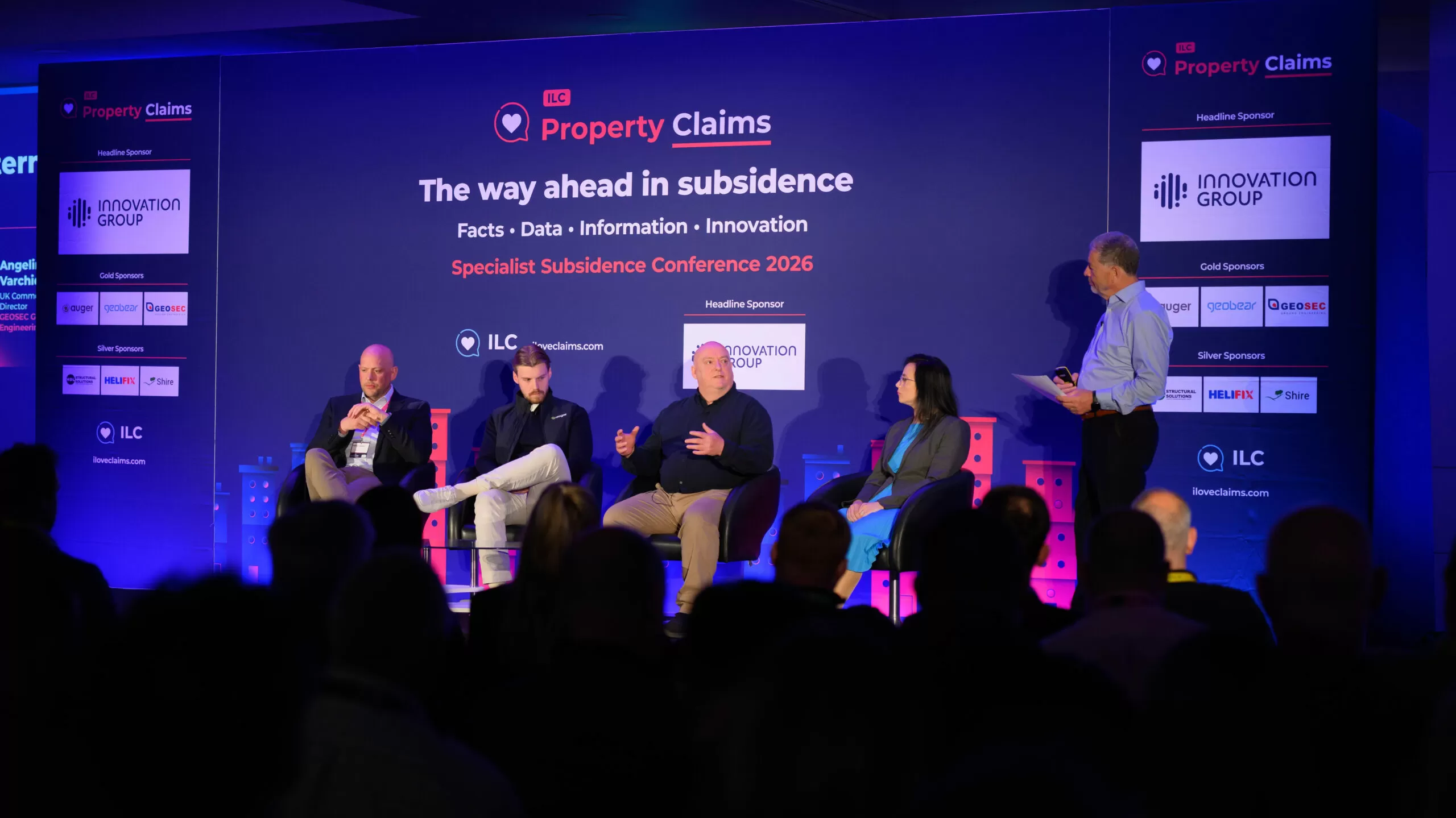
Paul was taking part in an expert panel watched by more than 200 technical and insurance claims people attending the ILC conference at the British Motor Museum, in Gaydon, Warwickshire.
Responding to subsidence threats
Catalyst Managing Director Brad Jackson, who also attended the conference, said: “This was a valuable opportunity for us to take part in debates about issues and developments that are critical to our response to subsidence.
“Sharing experiences helps us all refine the way we support subsidence claims customers in the here and now, while developing new technologies and systems that continuously improve how we respond to emerging subsidence threats, not least ones triggered by climate change.”
Using data, satellite technology and artificial intelligence (AI), including large language models, to guide subsidence claims handling is one of the sector’s most rapidly evolving areas of work.
New skills needed to interpret data
Training and technical understanding emerged as one of the major themes throughout the discussion.
Paul advised that a huge uplift in data gathering required an equally committed focus on developing the skills needed to interpret it, alongside the recruitment of the next generation of subsidence technical specialists.
In a debate chaired by Alan Soutar, Chairman of Property at ILC, Paul told the audience there was a growing array of data available to both subsidence engineers and claims professionals.
The increasing sophistication of claims systems creates opportunities to identify bottlenecks, improve processes and support better operational decisions, he pointed out.
Vital to make good decisions early
What is crucial is how it is interpreted and making sure it is shared in the right way and at the right times across multi-disciplinary teams responding to a subsidence event.
Paul also said technical experts need to be involved early in the subsidence claims journey for the right decisions to be made and outcomes optimised for insurance providers and their customers.
He explained: “If you get the right people at the front end, who can direct [decision-making and action needed] to the right places, you end up with less of an issue.”
Technical service companies, like Catalyst, and insurance providers and loss adjustors, also needed to continuously renew their expert teams and understanding to make best use of new technologies.
Raising profile of subsidence careers
Reflecting on the debate after the conference, Paul said: “Maintaining and developing skills and capabilities in a sector where new technology is being introduced at pace, is very important.
“It is a priority for us at Catalyst where we have a training academy that supports continuous learning for our teams and assists claims professionals in understanding complex issues like subsidence.
“The Subsidence Forum champions the creation of clear entry pathways into the subsidence sector. It’s critical that we demonstrate the long-term career opportunities so the sector remains sustainable and resilient.
“Catalyst also supports this objective. By actively collaborating in the forum’s events, like the annual subsidence training day, it contributes to knowledge transfer and professional development.”
Opportunities to gather data remotely using satellites, and backing up that evidence with increasingly advanced site-specific geotechnical analysis, was also discussed at the ILC subsidence conference.
The high level of variability of ground conditions, even across a small area, meant broad satellite data sets, by themselves, were rarely enough to resolve insurance claims, the audience was told.
AI revolution in subsidence data
Delegates at the ILC subsidence conference also heard that having insurance claims expertise in place remains critical in understanding how data needs to shape operational decision-making, to manage a claims journey effectively, transparently and fairly.
Over the last 3-4 years, between the 2022 subsidence surge and the current one, there are indications that technical specialists are able to report findings significantly quicker, in part, due to innovations in data collection and processing.
The conference was told these improvements are also associated with often simple new ways to generate and manage data during a claims journey, so innovation does not always have to involve advanced technologies.
That said, AI is increasingly being used to shape how subsidence claims data is processed and the claims journey is managed. However, delegates heard there was caution about introducing AI systems too rapidly.
Insurance specialists needed to remain in control of the process to interpret complex claims effectively and sensitively, ensure correct decisions are made at all point in the claims journey and that customers are content with the fairness of final outcomes.
Catalyst team meet insurance claims colleagues at the ILC Specialist Subsidence Conference
About Catalyst Services UK
Catalyst delivers a comprehensive range of services to resolve claims for a growing number of insurance providers, brokers, and loss adjusters.
Insurance professionals were on track to significantly boost their understanding of one of the most complex property maintenance issues by attending the Subsidence Forum Training Day....