January 31, 2023
Why homes maintenance to combat mould is a growing priority
Damp conditions leading to the growth of mould in homes is a perennial problem....
Now is the time of year when water leaks can become more apparent.
As the ground dries out, tell-tale wet patches and inexplicably lush areas of grass reveal where water is being lost from belowground supply pipes.
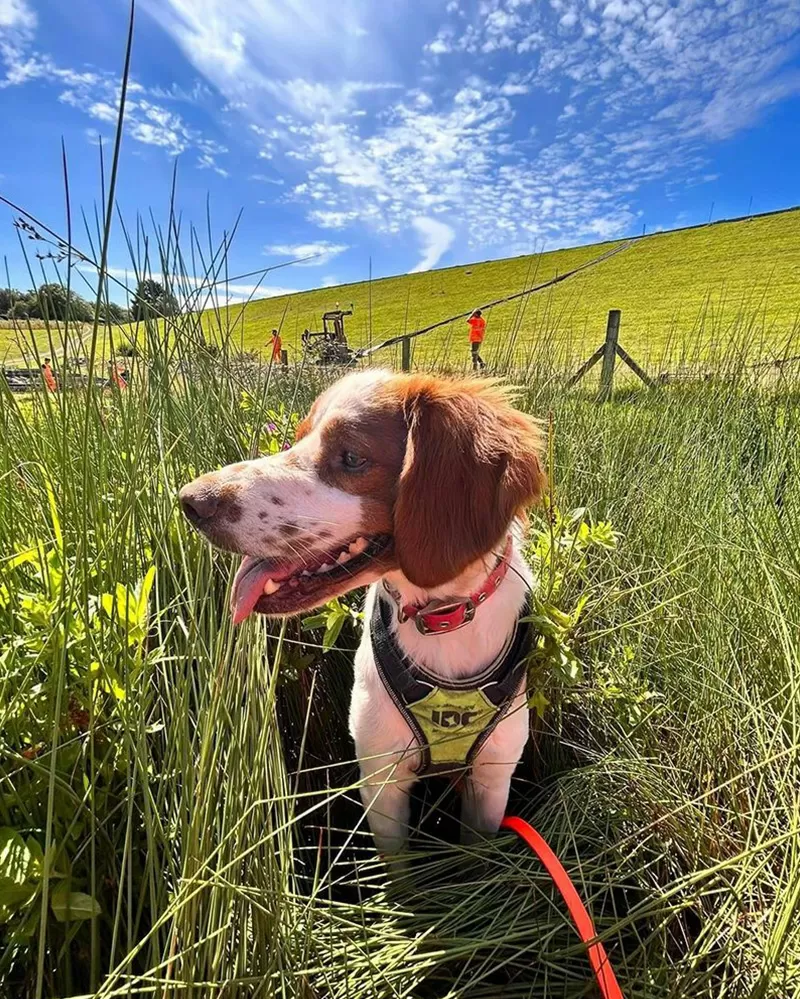
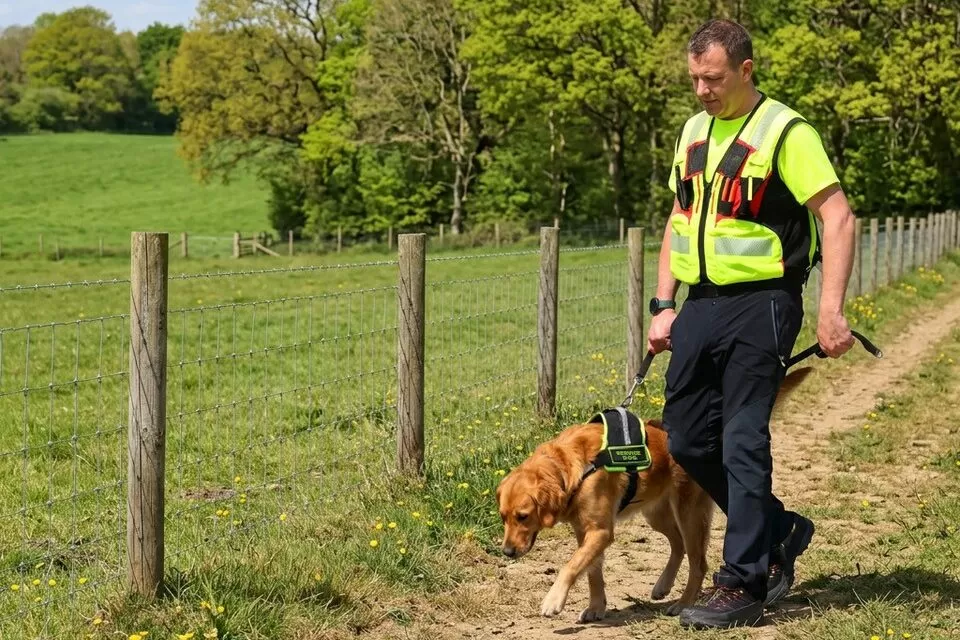
But what happens when a leak isn’t so obvious? Water companies across the UK are turning to four-legged friends in the fight against water leaks: sniffer dogs.
From rural Scotland to South-West England, detection dogs are being used to track down leaks that don’t show on the surface.
Trained to identify trace levels of chlorine in treated water with noses between 100,000 and a million times more sensitive than a human’s, they can detect leaks that are invisible to the naked eye.
Brad Jackson, Managing Director at Catalyst Services UK, said: “It’s a smart solution that’s used mainly to trace larger leaks along long runs of water mains in largely rural areas.
“It also underlines an important truth: Leak detection is often not simple. When water escapes underground or inside a building, the source is not always obvious.
“The signs of a leak don’t always appear where the problem starts. That’s why successful leak detection depends on more than one method.”
Catalyst puts this principle into practice providing leak detection services for insurance and lost adjuster companies across the UK. Achieving the right result depends on using the right technique at the right time.
The company’s water supply technicians work against the clock to find leaks quickly, because the longer they are left, the more damage they can cause.
This is particularly true if the leak occurs inside a property, under floors, behind walls, in ceiling voids, in basements or in lofts and attics.
If left undetected, escaping water can undermine structures, causing subsidence, flooding, rot damage and mould, which is both expensive to put right, and often bad for health.
In many cases, water can seep surprisingly long distances before it becomes visible, which can make the source of the leak difficult to pinpoint.
This complexity is precisely why leak detection specialists, like Catalyst, uses a wide range of techniques, including detection dogs in some situations.
The company’s Leak Detection Service draws on a full range of proven solutions, matching these technologies with significant experience and expertise, which is just as important to interpret results.
Acoustic profiling uses advanced microphones and specialist software to locate the noise created by a water leak and analyse it accurately.
Correlation leak detection, meanwhile, involves the placement of two sensors that identify the frequency of sound made by a leak and uses their relative positions to pinpoint the leak’s location.
This technique is used, especially, to detect links in hot water pipes, even ones located beneath concrete.
Thermal imaging allows large areas of a building to be checked for leaks very quickly.
Tracer gas detection is used to find water leaks in pipes buried underground.
The gas injected into the pipe escapes from the point of the leak and rises to the surface, even through concrete and asphalt, where it is detected by gas sensors.
A simpler way to detect leaks, dye leak detection involves a non-toxic dye being introduced to the pipe. The coloured water can then be seen where it is escaping from the system.
A solution Catalyst’s technicians often turn to first to locate internal leaks. Damp meters can be used to identify hard-to-see damp areas in walls, floors and ceilings to trace the source of a leak.
Vigilance is key to catching a leak early. As outlined in our comprehensive Water Leak Detection Guide, here are some top tips and signs to look out for:
Go to the Catalyst Water Leak Detection Guide now to learn more
Several water companies are reporting success in using water leak sniffer dogs. Southern Water deployed “super sniffer dogs” to snuffle out leaking water mains in Hampshire.
Scottish Water, Portsmouth Water, and Yorkshire Water have also used canine friends for the same purpose.
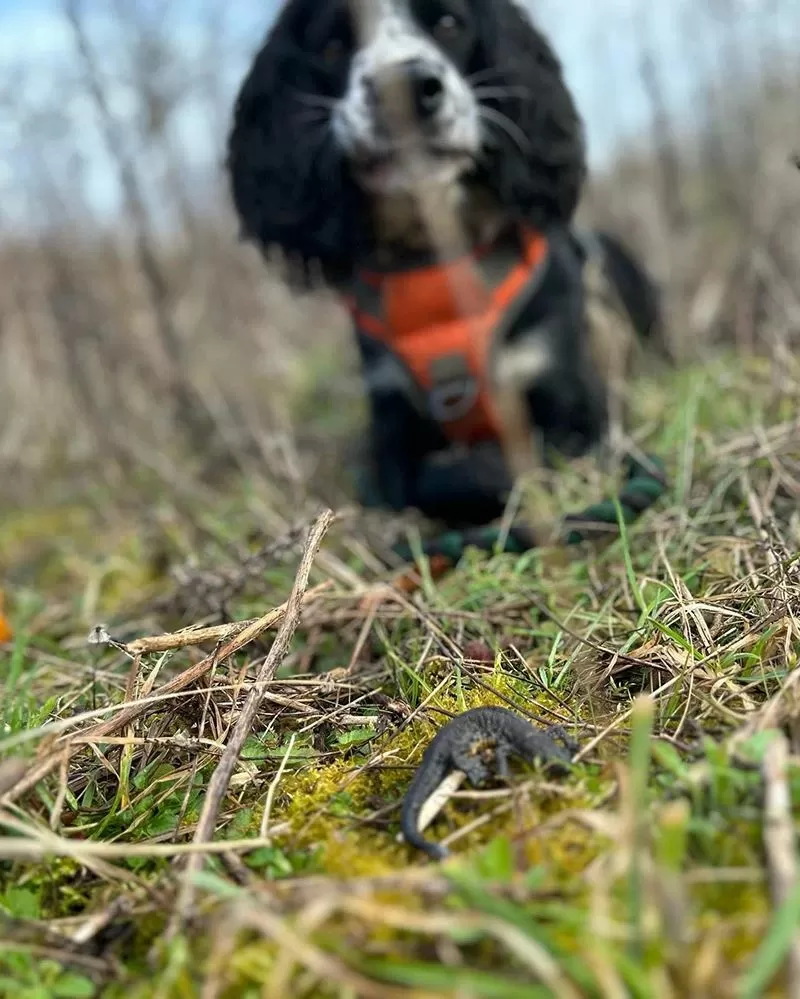
Wessex Water is even using detection dogs for a different purpose: sniffing out protected great crested newts to prevent disruption during pipeline works.
Brad Jackson said: “Water leak detection dogs are not used as much in urban environments, where our other specialist techniques and technologies are highly effective.
“We’d also consider using leak detection dogs if it was clearly the right approach, for example to work in the grounds of a large property, where using other solutions might be difficult.”
Deploying sniffer dogs shows the efforts needed to locate elusive leaks. It also reinforces a point Catalyst teams see every day – leak detection requires the right technology, expertise and determination.
Catalyst delivers a comprehensive range of services to resolve claims for a growing number of insurance providers, brokers, and loss adjusters.
They include: subsidence investigations, drainage surveys and repairs (mains and off-mains), water supply pipe repairs and replacement, water leak detection, and environmental services.

January 31, 2023
Why homes maintenance to combat mould is a growing priority
Damp conditions leading to the growth of mould in homes is a perennial problem....