July 17, 2026
The heat is on – how climate change is impacting below ground services insurance claims
This summer’s heatwaves, and the climate change behind them, are putting homes and business...
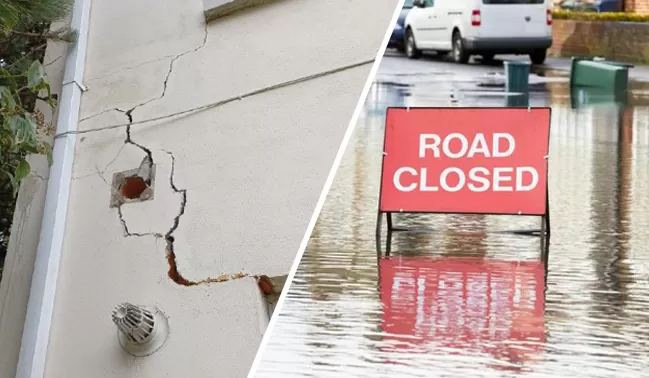
The UK is experiencing another summer of extreme weather, but for insurers the immediate effects of drought may only be one part of a wider and more complex claims challenge.
Prolonged dry conditions are already increasing the risk of subsidence. But when the weather changes, that risk does not disappear. It could just get more complicated.
Intense rain falling onto dry, stressed ground can contribute to rapid surface water run-off and flash flooding.
If wetter conditions then persist into autumn and winter, progressively saturated catchments can increase the potential for river and groundwater flooding.
For claims teams, this creates a more challenging picture.
Different weather-related risks can follow one another rapidly, overlapping and placing pressure on technical resources that may struggle to meet widely fluctuating demand.
It is a process being described as weather whiplash. And, arguably, we’re right in the middle of one now.
Very dry conditions in 2025 were followed by one of the wettest winters on record. Over the summer of 2026, we’ve been back in drought again, one of the worst on record.
Now the Met Office is warning that an El Nino climate event, currently developing in the Pacific Ocean, is expected to be the strongest in living memory.
It is raising global temperatures, a process that the Met Office predicts could trigger wetter and stormier conditions across North West Europe, including the UK, this autumn and early winter, increasing the risk of floods.
New terms, like weather whiplash and flash drought, seek to make sense of these extreme weather fluctuations, which climatologists say have an underlying cause: climate change.
Catalyst Services UK Managing Director Brad Jackson says: “Extreme weather swings over shorter periods are presenting a challenge for insurance providers and service suppliers like us.
“For example, there are clear signs we’re entering a subsidence surge right now, after a surge last year. That means a subsidence claim made last year may not be closed before further damage is reported.

“On top of that, the property could be affected by surface water flooding, too. Insurance providers will need to plan for more complex risks, over a wider geographical area, potentially affecting millions more properties.
“Service suppliers like us also need to scale up and adapt our capabilities to meet extra service demands and bigger, more complex challenges.
“That’s just what we’re doing. We’re recruiting more specialist claims handlers. We have extra mechanical rig and hand auger teams out in the field. And we’re investing in our data systems.
“We’ll also be adapting our learning programme, through the Catalyst Training Academy, to respond to what are potentially seismic shifts in insurance claims, so we’re ready for what comes.”
While the insurance industry is looking to a potentially different claims future, the immediate claims concern is drought, and how it can drive up cases of subsidence.
As of 10 August 2026, the Environment Agency reported that 71.3% of England was officially in drought, following the driest July in 190 years. No part of England was considered to be in normal status.
Those conditions are already translating into increased subsidence risk.
Soil moisture analysis, used to assess the risk of subsidence, is already causing some subsidence experts to say a subsidence surge has already begun – and is likely to be as bad, if not worse, than a record surge event, in 2003.
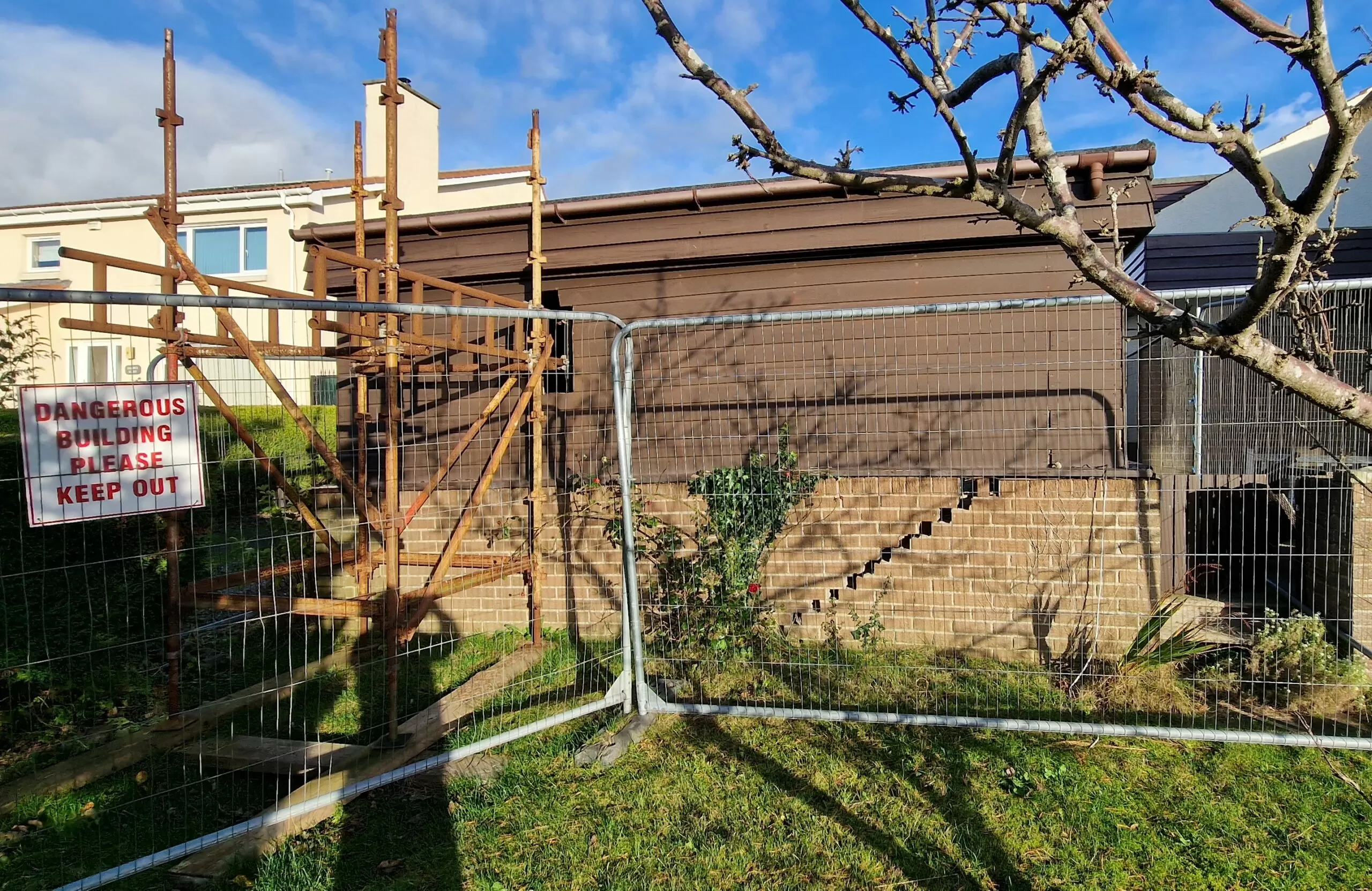
In mid-August, the MORECS soil moisture deficit measure had reached its maximum level of 308.2, faster than during any previous subsidence surge year since 2003.
This is relevant because 2003 is a benchmark subsidence year for the insurance industry, because it is one of the UK’s major subsidence surge years.
It is used to define what a subsidence surge is: what the Institution of Structural Engineers says is a year in which there are more than 50,000 subsidence claims.
Many insurers are reporting a big jump in subsidence notifications during August compared with previous months, a trend reflected by Catalyst’s subsidence claims workload.
At the same time, the cost of individual claims is increasing. The Association of British Insurers released figures for the second quarter of 2026 that show the average value of a domestic subsidence claim was a record £20,000.
All this data points to 2026 being another very significant surge year, landing on top of a period of increased notification volumes, higher claim costs and potentially prolonged investigations.
Then again, subsidence is just one dimension of an increasingly interconnected challenge. There is every possibility that floods are coming.
After weeks of dry weather, rainfall is welcome. But the first significant rain can also introduce another claims risk.
It is sometimes said that dry ground becomes too hard to absorb water. The reality is more complicated.
Drying can alter soil structure in different ways. Cracking can sometimes create routes for water to enter the ground more quickly, while other soils can become sealed or water-repellent.
Vegetation weakened by sustained hot and dry weather may also be less effective at intercepting rainfall and slowing its movement across the landscape.
For flood risk, the critical issue is often how quickly the rain falls. Gentle, prolonged rainfall gives water more time to infiltrate the ground and replenish depleted soil moisture.
A sudden torrential downpour can deliver far more water than the soil, vegetation and local drainage infrastructure can accommodate.
The result can be rapid surface water run-off and localised flash flooding, even while an area remains officially in drought.
This distinction is important for claims teams because water-resource drought and flood risk are interlinked. A region can be experiencing both at the same time.
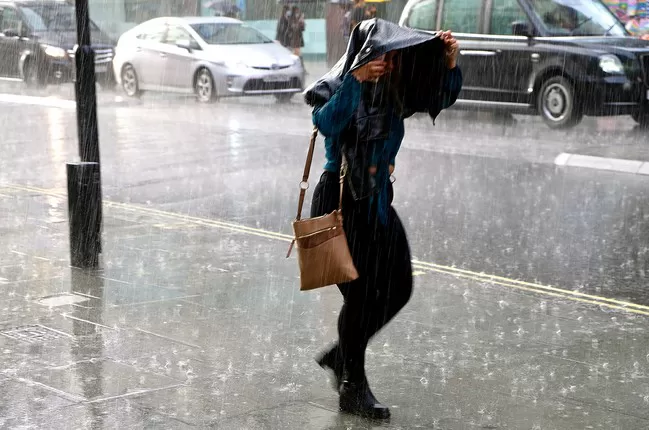
Flash flooding is particularly important because its geographical footprint can be much wider than floods associated with rivers.
Heavy rainfall can overwhelm drainage systems, collect on roads and paved surfaces and enter homes and businesses within a relatively short period.
Flood Re says more than 4.6 million properties in England are now at risk from surface water flooding, making it the country’s largest individual source of flood risk.
For insurers, this has implications for how flood exposure is understood. It also increases the importance of drainage investigations when establishing what happened and why.
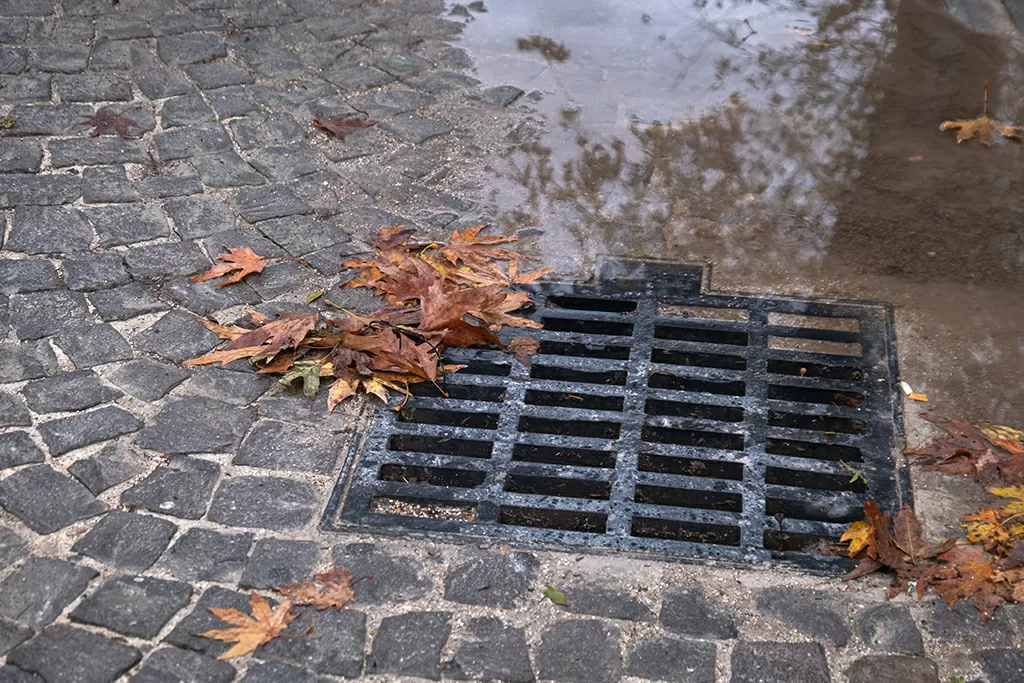
Blocked, damaged or inadequate drainage may contribute to an incident, while in other cases the simple volume and intensity of rainfall can exceed what a functioning system was designed to handle.
It is too early to say what autumn and winter 2026/27 will bring.
A dry summer does not automatically mean a wet winter will produce severe flooding. Depleted soils, groundwater, rivers and reservoirs have significant capacity to accommodate rainfall.
But as that capacity is used it, river flood risks could rise. The Met Office and other weather experts are saying this year’s El Nino is making flooding more likely, and are warning householders and businesses to start getting prepared for the worst.
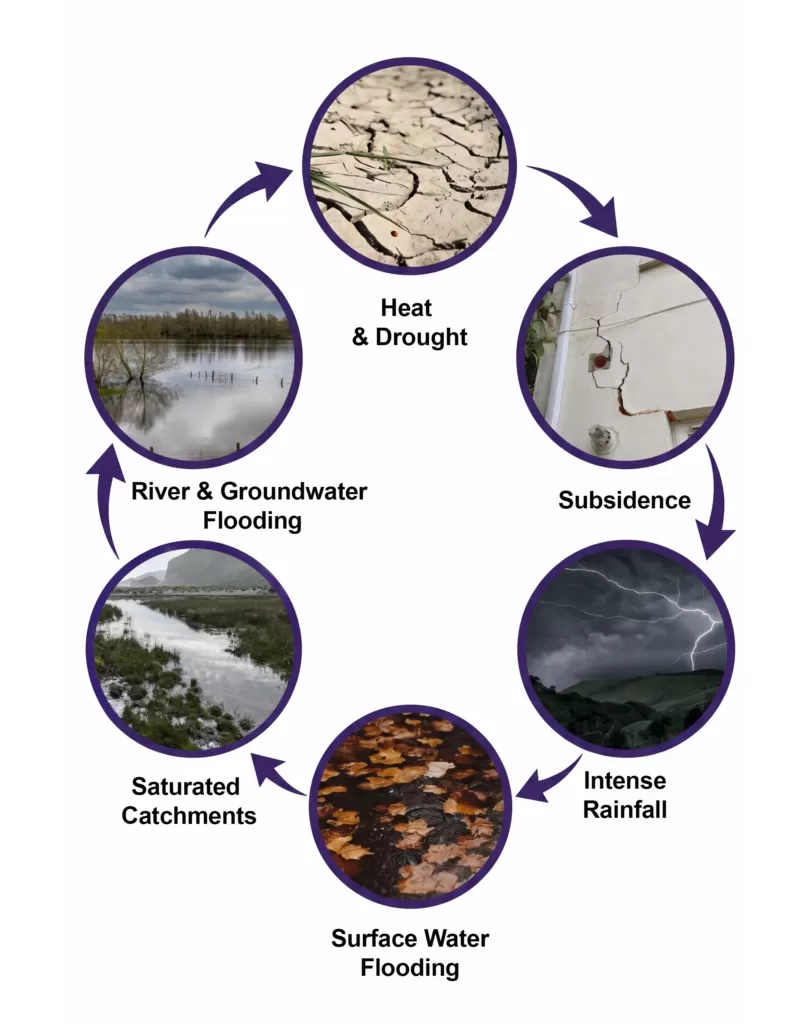
These accelerating climate cycles, reinforced by natural phenomena like El Nino, mean insurers need to be prepared for a sequence such as:
Heat & Drought > Subsidence > Intense Rainfall > Surface Water Flooding > Satuarated Catchments > River & Groundwater Flooding
It’s a risk cycle that may not be present everywhere, or every year. But it illustrates why increasingly volatile weather requires a broader view of claims preparedness.
For claims functions, weather whiplash could create operational pressures as well as additional loss.
Properties may present more complex circumstances. Ground movement, damaged drainage, water ingress and flooding may increasingly exist as connected issues.
Technical resources could become stretched as these more challenging claims become more frequent. There may be a need for technicians and engineers to have broader skill sets to tackle these claims, as well.
This is where access to joined-up technical support becomes increasingly important.
It is also why Catalyst Operations Director Paul Duddle has made training, skills development and expertise retention a priority for his term of office as chairman of the Subsidence Forum.
Paul said: “The subsidence industry has to respond to a rapidly changing environment and new challenges. We’re already having to work hard to cope with claims workload as it is.
“The forum’s insurance members say want greater resilience in the sector to respond to more frequent and possibly deeper, more extensive surges and more complex claims profiles.
“We will need more technical boots on the ground, develop training that provides our people with the right skills mixes and embrace new technologies, like satellite monitoring and AI analysis, at pace.”
The claims challenge is understanding how new risks interact, how quickly conditions can change and how effectively the industry can respond when one weather extreme follows another.
Catalyst delivers a comprehensive range of services to resolve claims for a growing number of insurance providers, brokers, and loss adjusters.
They include: subsidence investigations, drainage surveys and repairs (mains and off-mains), water supply pipe repairs and replacement, water leak detection, and environmental services.
Talk to us today about how we can help.
Call: 0333 004 8008.
Or email: [email protected].

July 17, 2026
The heat is on – how climate change is impacting below ground services insurance claims
This summer’s heatwaves, and the climate change behind them, are putting homes and business...

February 12, 2026
Extreme weather is the new normal – this is what it means for drainage maintenance
Prolonged rainfall this winter is a sign of a pattern of weather we must...